
Gear guide
Build your portable station
Everything you need to get on the air from a park, a summit or the back yard, in four easy steps.
Watch first
My essential portable HF gear
People keep asking what’s in my bag, so here it is. In this 16 minute video I go through the gear I carry to the field and how I set it all up, from the Yaesu FT-891 to the mast, antenna, winder and coax.
My gear changes with the trip. Flying means tiny, light, low power gear. This is what I carry most of the time.
Step 1: Get your antenna up high
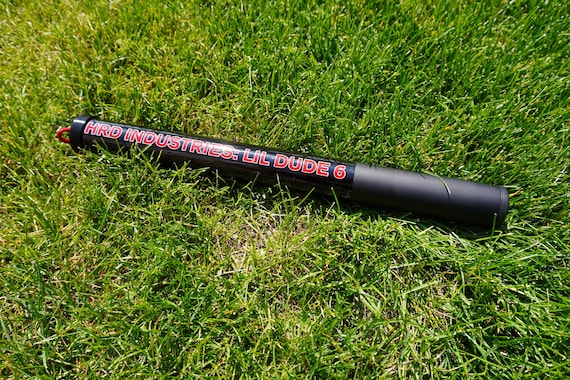
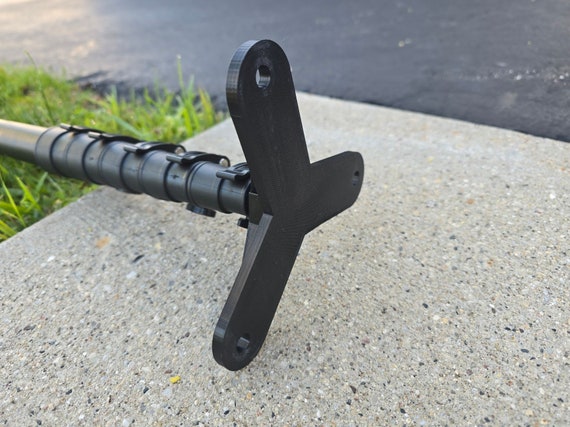
A light carbon fiber mast lifts a wire antenna about 20 ft in the air and packs down to 16 inches. No trees needed.
Step 2: Plant it in the ground
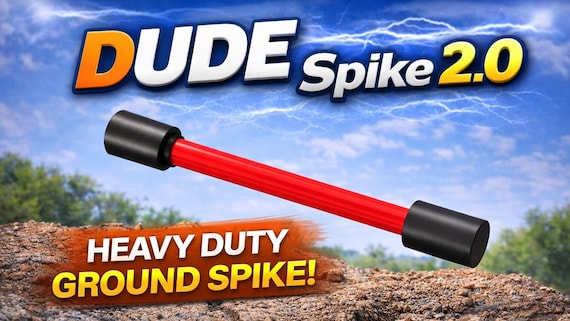
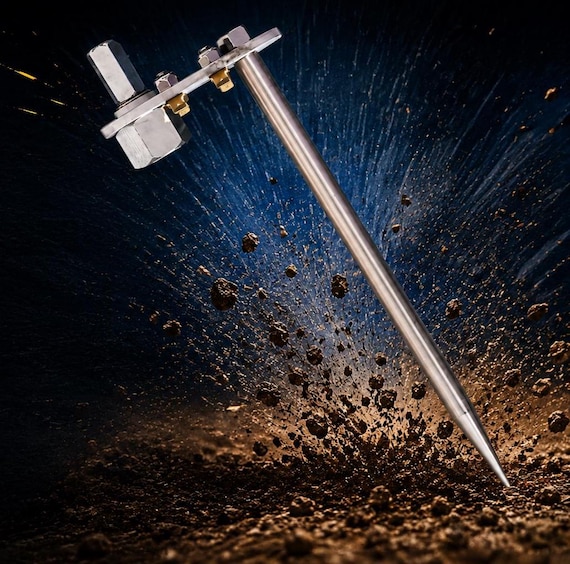
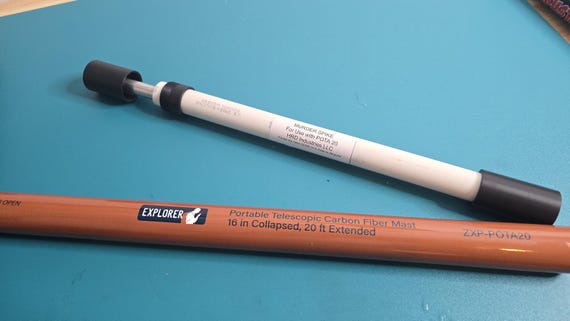
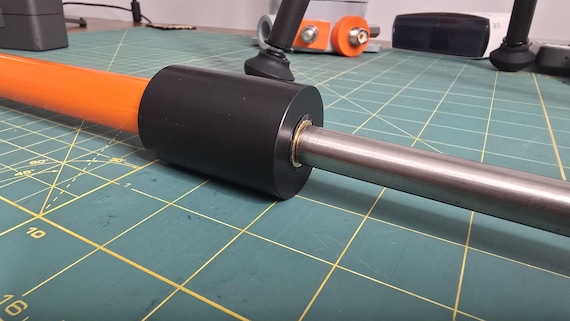
A ground spike holds your mast or vertical upright on its own. No tripod, no guy lines, no table clamp.
Step 3: Pick your antenna
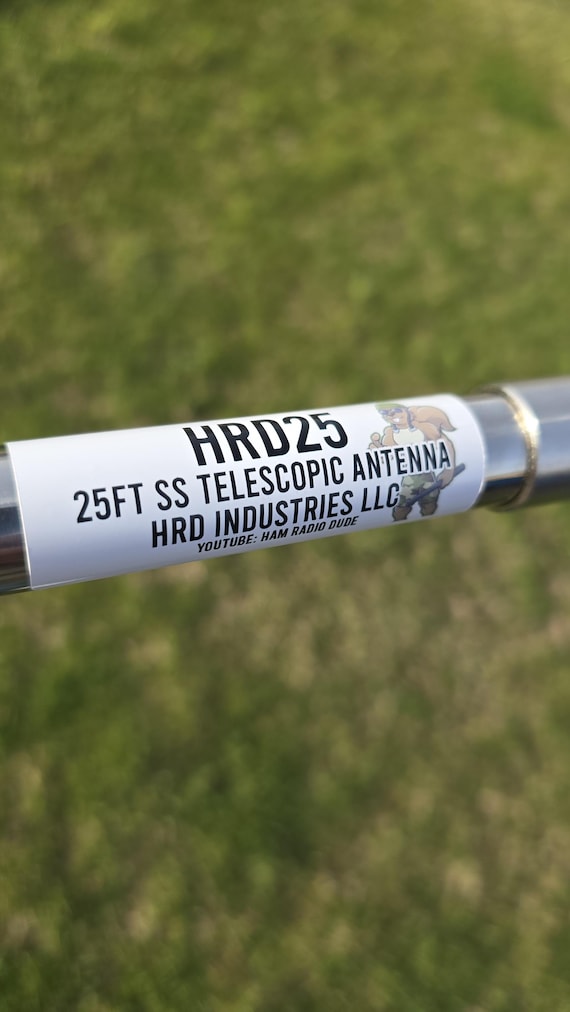
A 25 ft whip for a quick vertical, a multiband vertical kit, or an end fed half wave to hang from your mast. Dude’s tip: run about 65 ft of EFHW wire as a sloper off a light carbon fiber mast.
Step 4: Keep the wire tidy
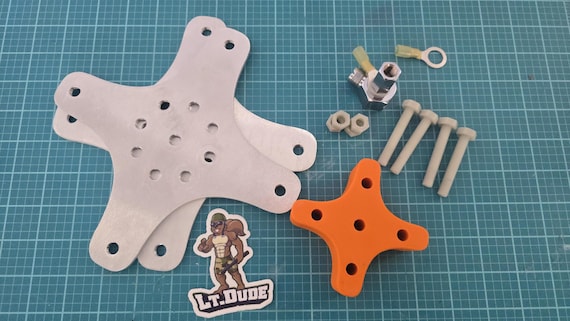
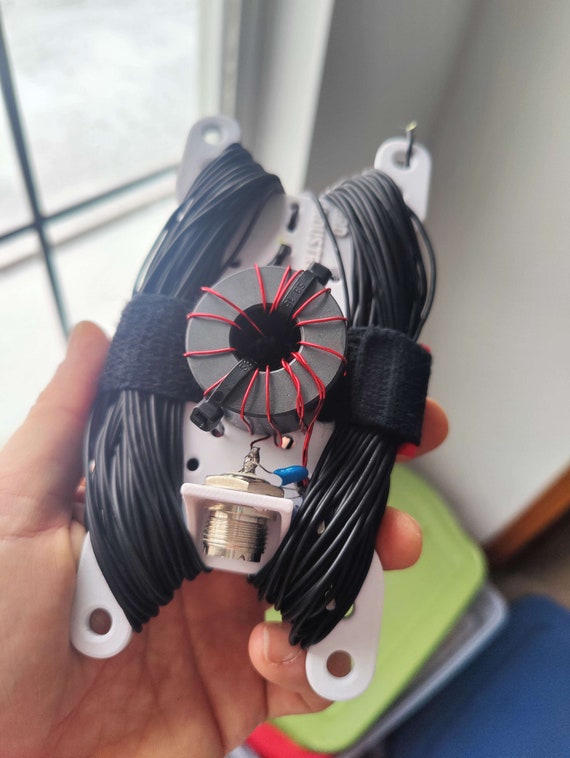
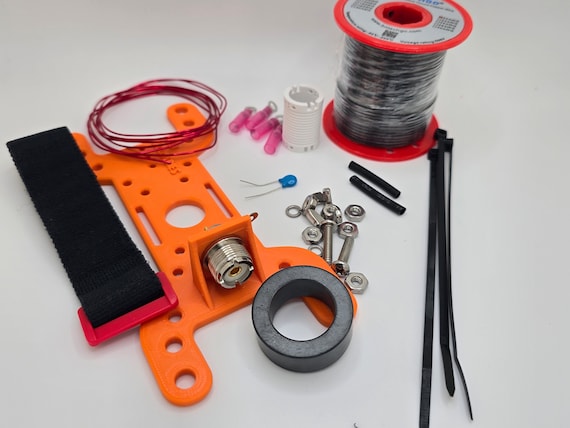
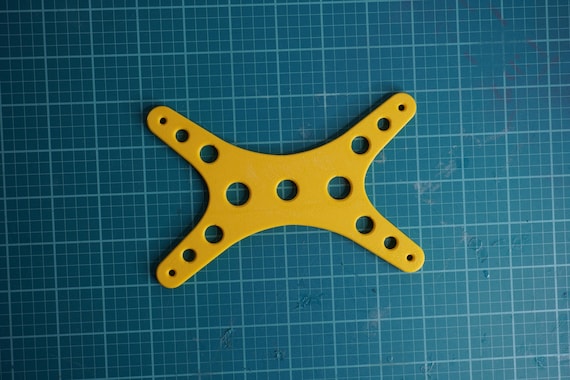
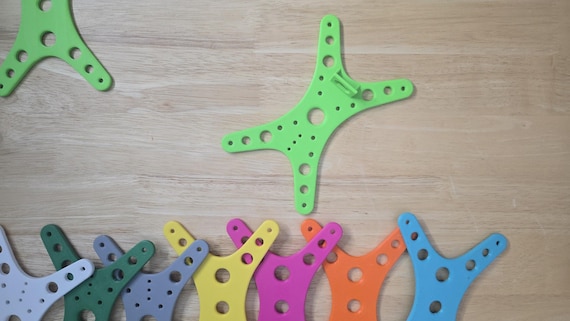
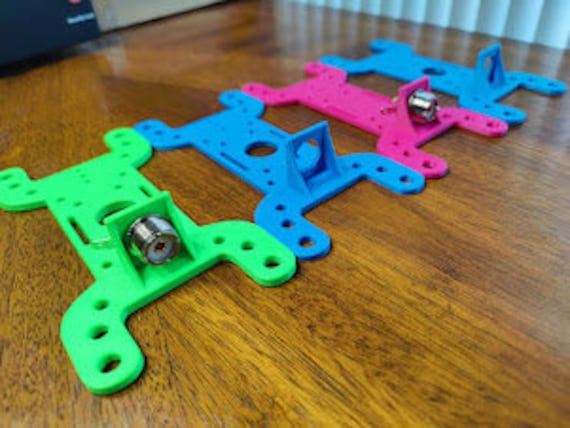
A winder stores your antenna wire tangle-free, and some have the coax connector built right in.

Popular setups
Two easy combinations hams use in the field.
The no-tree end fed
Stand the mast on its own spike and run an end fed half wave from the top down at an angle, as a sloper. About 65 ft of wire (cut for 40 m) works well with a light carbon fiber mast like the LD6. Works in any park, even with no trees in sight.
The two-minute vertical
Push the spike in, screw on the whip, lay out a few radials and you’re on the air.
Which radio should you get?
Dude’s go-to portable radio
Yaesu FT-891
This is the radio that goes to the park with me. It’s a 100 W HF and 6 m radio in a body about the size of a hardback book, and it’s tough enough to toss in a pack. It pairs great with the LD6 and a DudeTenna or an HRD25.
How I run it: at 50 W. Cutting power in half only costs about half an S unit on the other end, which most stations won’t notice, and the battery lasts a lot longer.
What powers it: a LiFePO4 battery. For a light, quick activation I bring a 9 to 16 Ah pack. For a long day in the field I bring a 100 Ah.
- 160 m to 6 m
- Up to 100 W, I run 50 W
- LiFePO4 power
- Small and rugged
For POTA (Parks on the Air)
Portable radios with a built-in battery and antenna tuner make life easy. Popular picks: Yaesu FT-891, Icom IC-705, Xiegu G90, Elecraft KX2.
For SOTA (Summits on the Air)
Every ounce counts on a hike. Look at the Elecraft KX2 or a Mountain Topper for the lightest setup.
For FT8 and digital modes
Any modern HF radio with a USB connection works great. The Icom IC-7300 is a popular choice.
For beginners
Start with a good VHF/UHF handheld, then step up to HF with something like the Xiegu G90 or Yaesu FT-891.
Common questions
What is the best ham radio for POTA?
Popular choices are the Yaesu FT-891, Icom IC-705, Xiegu G90 and Elecraft KX2. Dude takes a Yaesu FT-891 to the field: it is small, tough and runs up to 100 W. He runs it at 50 W on a LiFePO4 battery, since half power only costs about half an S unit and the battery lasts much longer. The IC-705 and KX2 are lighter and have built-in battery options, which helps on long hikes.
What ham radio should a beginner buy?
Start with a quality VHF/UHF handheld for local repeaters. When you are ready for HF, look at the Xiegu G90 (budget-friendly with a tuner), the Yaesu FT-891 (rugged and reliable), or the Icom IC-7300 (great waterfall display). A local club is a great place to get hands-on help.
What equipment do I need for FT8?
You need an HF radio with USB audio or CAT control, a computer running WSJT-X, and an HF antenna for the bands you want. Radios without USB need a sound card interface.
What is the best portable HF antenna?
It depends on where you operate. An end fed half wave on a mast covers several bands and needs no trees if you use a mast and ground spike. A vertical, like a 25 ft whip on a ground spike, sets up fast in open areas.
How long should an end fed half wave be for a portable mast?
Dude runs about 65 ft of wire, which is a half wave on 40 m, as a sloper: one end goes to the top of a light carbon fiber mast like the LD6, and the wire slopes down toward the ground. Cut for 40 m, a DudeTenna EFHW also works on 20, 15 and 10 m. You do not need to get the whole wire high in the air for it to work well.
Do I need a tree for a portable wire antenna?
No. A telescoping carbon fiber mast on a ground spike holds the end of your wire about 20 ft up, anywhere you can push a spike into the ground.
Not sure what fits your setup?
See our side-by-side comparisons, watch videos from other hams, or message Dude on Etsy with your questions.